If you've ever closed a deal and then watched the customer get handed off to someone they've never spoken to, you already know the problem I'm about to describe.
That moment where a customer goes from feeling like a priority to feeling like a ticket number is one of the most quietly destructive things in SaaS. And it's been accepted as normal for way too long.
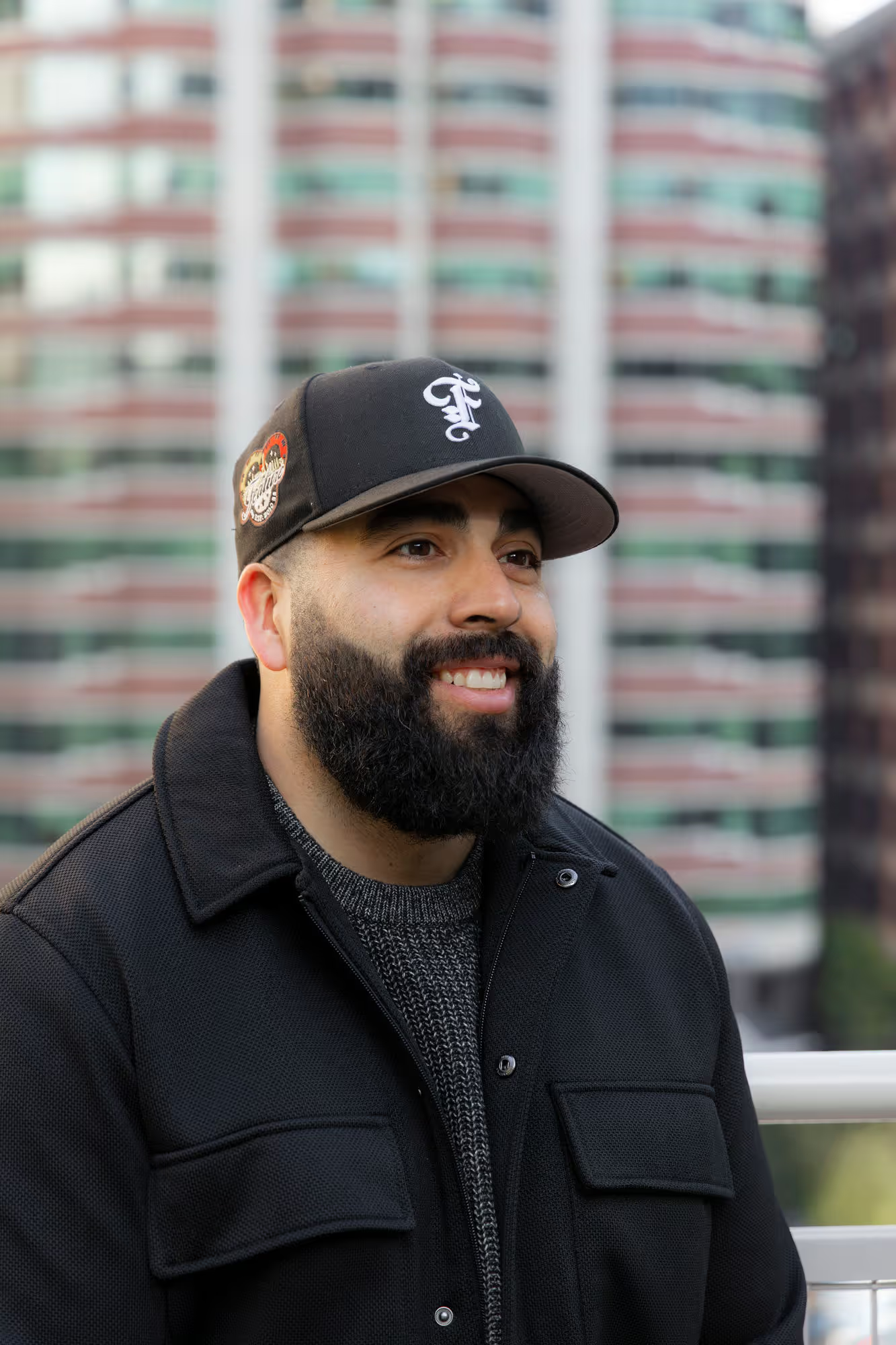
I recently sat down with Andy Becerra, our founding Customer Success Engineer at Zig, for the latest episode of Take 5 with a Founder. Andy's had a career that spans door-to-door sales, inside sales, sales engineering, and account management. He's seen the customer journey from every angle. And when I was designing this role, that kind of range is exactly what I was looking for.
The Handoff Problem Nobody Wants to Admit
Here's the pattern I've seen play out, both as a customer and as someone who's led sales organizations.
Your sales rep spends weeks, sometimes months, building rapport. They learn your business, understand your pain points, earn your trust. You sign the deal. Onboarding begins. And then there's this dead period where you hear from nobody. Eventually, you get introduced to a customer success manager you've never met, who knows almost nothing about the conversations that got you there.
As Andy put it, there's this "unemotional handoff" where the customer feels like "just another box being checked."
Why I Didn't Just Hire Another CSM
When I was building out Zig's team, I looked at a few models. Forward-deployed engineers are great. They go deep with customers on the technical side. Traditional CSMs handle the relationship post-sale.
But neither role does what I actually needed.
An FDE goes in, does really deep technical work, and then they're done. You move on to someone else. A CSM picks up the relationship but often lacks the technical depth to actually solve problems in real time.
I wanted someone who could do both. Someone who's in the room before the deal closes, understands the customer's workflows deeply, stays with them through onboarding and beyond, and has enough technical fluency to translate feedback into product changes fast.
That's what a Customer Success Engineer is. It's not a hybrid title for the sake of sounding different. It's a fundamentally different role.
What a CSE Actually Does Day to Day
Andy described it simply: "It really starts in the early stages of closing a deal. You jump on right prior to onboarding and really understand the customer—what they need, what's messed up, what they want to fix, what they want to establish, and what they want to produce."
From there, you're walking alongside the customer through the entire journey. Not just checking in quarterly. Not just sending NPS surveys. Actually listening, adapting, and feeding what you learn back into the product.
The real skill lies in interpreting what the customer is actually trying to accomplish and then working with engineering to build toward that outcome. Sometimes the customer says they want Feature X, but what they actually need is a completely different solution to the underlying problem.
A CSE bridges that gap. They're close enough to the customer to understand intent, and technical enough to work with engineers on execution.
The Power of Saying No
There's a moment in our conversation that I think every sales leader and founder needs to hear.
We had a situation where a customer wanted something that was partially in our scope. We could do one piece of it really well, but the other piece wasn't something we were going to be great at. Instead of forcing it, instead of saying yes to everything just to keep the customer happy, we were honest. We told them exactly what we could and couldn't do.
And they came back.
Saying no is one of the most underused tools in customer success. Too many teams are afraid that honesty will cost them the deal or the renewal. In my experience, it's the opposite. Customers respect you more when you're straight with them. They trust you more. And trust is the foundation that every long-term customer relationship is built on.
What I'd Tell Other Founders
If you're building a product that requires any kind of customer onboarding or workflow integration, think hard about who owns that experience end to end.
The traditional model of sales → handoff → CSM → support ticket is built for scale, not for quality. And at the early stages, quality is everything. Your first customers aren't just revenue. They're your co-builders. They're telling you what your product should become.
Give them someone who actually listens. Someone technical enough to understand what's possible, empathetic enough to understand what's needed, and honest enough to say no when it's the right call.
That's what a Customer Success Engineer does. And it's one of the best investments we've made at Zig.
Watch the entire conversation here:
