
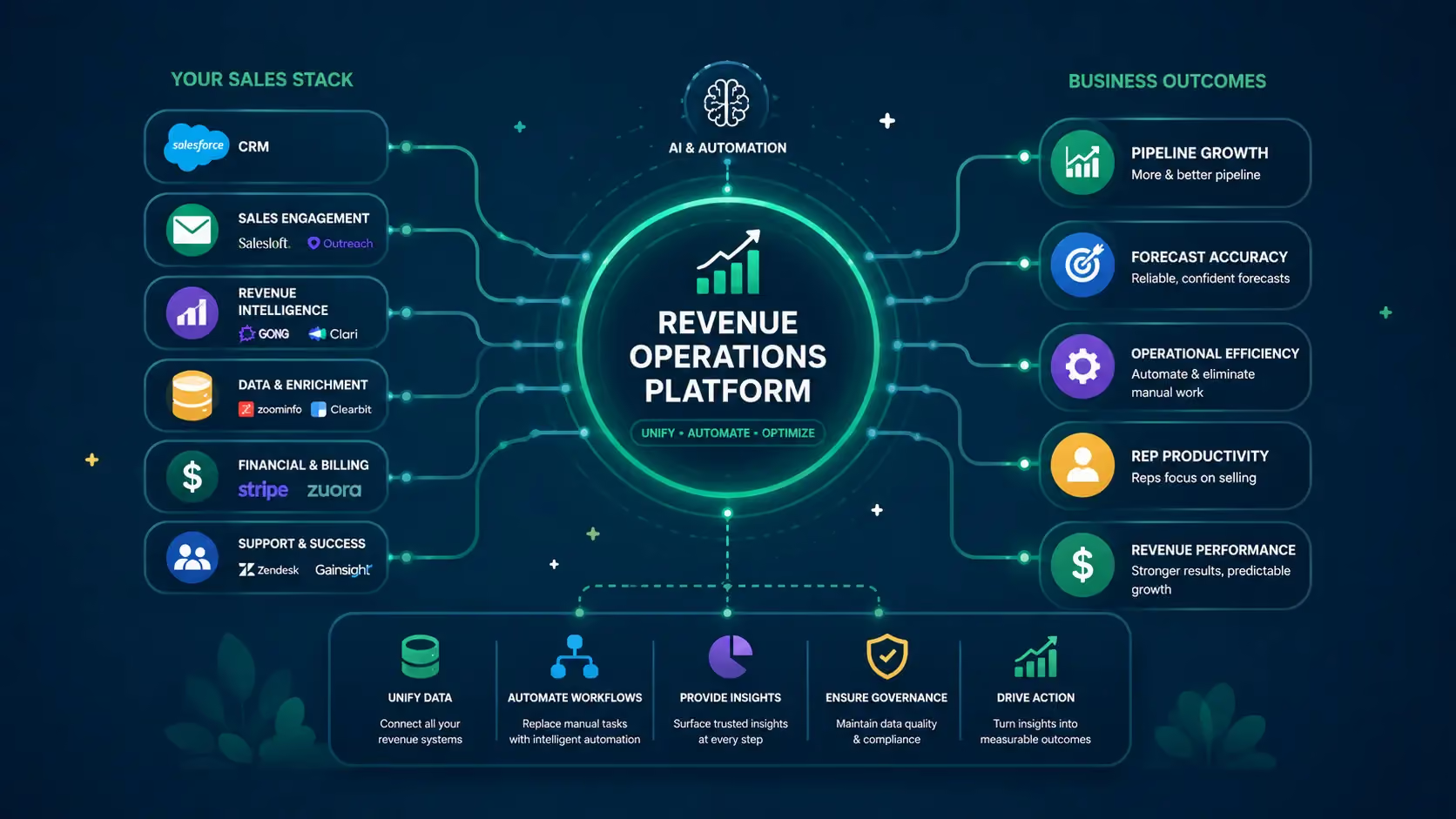
Most revenue teams don’t have a stack problem because they bought bad tools. They have a stack problem because every tool solves one slice of the revenue motion while the work between those tools still falls on reps, managers, and RevOps.
That’s where revenue operations platforms come in. They connect the systems behind your sales motion, improve CRM hygiene, reduce manual handoffs, and make the revenue process easier to run. But because the category now includes CRMs, forecasting tools, revenue intelligence platforms, sales engagement systems, enrichment workflows, and AI agents, the best choice depends on what’s actually breaking.
TLDR
A revenue operations platform unifies the systems, data, workflows, and processes behind your revenue motion. Your CRM stores the records, while a RevOps platform connects the stack around it, improves data quality, supports forecasting, and keeps the motion predictable.
In 2026, the category overlaps heavily with revenue intelligence, sales engagement, data orchestration, and AI sales execution. Zig fits into that mix as the execution layer for teams that want AI agents to reduce admin and actually do the work, while tools like Clari, Gong, HubSpot, Salesforce, Salesloft, Outreach, People.ai, Clay, and SyncGTM each handle a different slice.
Key Takeaways
- A revenue operations platform unifies revenue data, workflows, and systems across sales, marketing, CS, and ops.
- Your CRM is the system of record. A RevOps platform is the operating layer that improves data flow, workflow consistency, forecasting, and execution around it.
- Revenue intelligence is narrower than revenue operations. It focuses on deal health, forecasting, and risk visibility by capturing emails, meetings, calls, and buyer engagement instead of relying only on manual CRM inputs.
- The best platform depends on what's broken: Zig for AI sales execution, Clari for forecasting, Gong for conversation intelligence, HubSpot for CRM-centered RevOps, Salesforce for enterprise workflows, Salesloft and Outreach for engagement, People.ai for activity capture, Clay or SyncGTM for enrichment.
- If you want AI agents that execute work rather than summarize it, and pricing tied to outcomes instead of seats, that's where we fit.
What Is a Revenue Operations Platform?
A revenue operations platform connects the systems, data, workflows, and teams behind your go-to-market motion. While your CRM stores the customer and deal records, a RevOps platform helps manage the work around those records so sales, marketing, customer success, and operations aren't relying on disconnected tools, late updates, and manual handoffs to keep the revenue motion moving.
In practice, that usually includes:
Data and visibility: CRM data quality, activity capture, reporting, and cross-functional visibility across the go-to-market team.
Process and routing: Sales process automation, lead routing, account enrichment, and customer handoffs.
Forecasting and risk: Pipeline inspection, forecasting, and deal risk detection.
Execution: Workflow orchestration and AI agent execution, where the platform helps complete the work instead of only surfacing the issue.
Revenue Operations Platform Definition
A revenue operations platform connects revenue data and workflows across GTM teams so sales, marketing, customer success, and operations can work from a cleaner, more predictable operating model. Your CRM holds the records, while a RevOps platform helps govern how those records get created, enriched, updated, routed, inspected, and acted on.
Why the Category Is Hard to Define
Revenue operations software is hard to compare because the category now covers several different jobs. Some tools focus on forecasting, while others focus on conversation intelligence, sales engagement, CRM automation, enrichment, customer success, sales execution, or AI agents. That’s why two products can both call themselves RevOps platforms and still solve very different problems.
The useful question isn’t “which RevOps platform is best?” It’s which part of the revenue motion needs fixing.
Revenue Operations Platform vs CRM: What's the Difference?
A CRM and a RevOps platform aren’t competing systems. Your CRM is the system of record for accounts, contacts, opportunities, and activities, while a RevOps platform supports the operating layer around that record. It helps improve data quality, workflow consistency, forecasting inputs, and follow-through across the revenue stack.
Here’s how the two compare:
|
Category |
CRM |
Revenue Operations Platform |
|
Primary role |
System of record |
Operating layer for revenue workflows |
|
Main purpose |
Store accounts, contacts, opportunities, activities |
Connect tools, automate workflows, improve data quality, support visibility |
|
Data quality |
Depends heavily on rep input |
Enforces, enriches, automates, or inspects data quality |
|
Main users |
Reps, managers, RevOps, leadership |
RevOps, sales leaders, marketing ops, CS ops, finance |
|
Forecasting |
Often based on manually entered pipeline |
Uses connected activity, pipeline, and operational signals |
|
Workflow support |
Tasks, records, fields, dashboards |
Routing, enrichment, engagement, forecasting, execution, handoffs |
|
Best for |
Customer and deal recordkeeping |
Revenue process alignment and stack unification |
Short version: A CRM tells you what the deals are, while a RevOps platform helps make sure the work a
Does a Revenue Operations Platform Replace Your CRM?
Usually, no. For most mid-market and enterprise teams, the CRM stays the system of record, while the RevOps platform works around it to improve data quality, workflow consistency, forecasting, and execution. Some AI-native systems may try to replace parts of the CRM experience, but most B2B teams are better off keeping Salesforce, HubSpot, or another CRM in place and adding a layer that makes the existing stack work better.
That’s the approach Zig takes. We connect to your CRM rather than ask you to rip it out.
Revenue Operations Platform vs Revenue Intelligence Platform
Revenue operations and revenue intelligence overlap, but they aren’t the same category. Revenue intelligence helps teams see pipeline health, deal risk, buyer engagement, and forecast confidence more clearly. Revenue operations is broader because it also covers the systems, workflows, handoffs, and execution needed to run the revenue motion.
Revenue Intelligence Focuses on Visibility and Prediction
Revenue intelligence platforms analyze CRM data, calls, emails, meetings, and buyer engagement to show what’s happening in the pipeline and what may happen next. They’re useful when leaders need better visibility into deal health, forecast risk, rep activity, or customer conversations.
Revenue Operations Platforms Focus on Systems and Workflows
A RevOps platform may include revenue intelligence, but it usually reaches further into the operating model. It can support data governance, workflow automation, tool consolidation, routing, enrichment, process consistency, handoffs, and execution. Revenue intelligence reports on the system, while revenue operations helps improve how the system runs.
|
Category |
Revenue Intelligence |
Revenue Operations Platform |
|
Main question |
What's happening in the pipeline? |
How do we run the revenue system better? |
|
Focus |
Deal health, forecast risk, activity signals |
Data, process, systems, workflows, handoffs, execution |
|
Primary users |
Sales leaders, RevOps, managers |
RevOps, SalesOps, MarketingOps, CSOps, leadership |
|
Common outputs |
Forecast confidence, deal risk, call insights |
Cleaner CRM, automated workflows, unified stack |
|
Examples |
Gong, Clari, People.ai, Salesforce Revenue Intelligence |
HubSpot Operations Hub, Salesforce Revenue Cloud, Zig, Clari, Clay |
Put plainly, revenue intelligence helps you see what’s happening, while revenue operations helps fix how the revenue machine runs.
Why Mid-Market Sales Teams Need a Revenue Operations Platform
Mid-market teams often have enterprise-level complexity without enterprise-level operations headcount. They have enough pipeline, tooling, handoffs, and reporting pressure to need real discipline, but they rarely have enough RevOps support to enforce every workflow by hand. A revenue operations platform helps close that gap because it makes the system easier to run.
Tool sprawl creates hidden drag: Most teams grow the stack one pain point at a time, and every purchase made sense on its own. Eventually, every workflow crosses too many systems, and the cost shows up as friction nobody put on a line item.
CRM data gets unreliable: When every tool pushes and pulls from the CRM differently, you inherit duplicate records, empty fields, stale opportunities, and unclear attribution. The source of truth quietly becomes a source of doubt.
Forecasting depends on discipline: Forecast accuracy isn't just a forecasting-tool problem. It rests on clean pipeline data, timely updates, accurate stages, and consistent inspection. When any of those slips, the forecast inherits the error.
Reps become the integration layer: Without a unified layer, reps are the glue: copying context between tools, updating the CRM by hand, chasing their own follow-ups, cleaning pipeline after the fact. That's selling time spent on integration work the software should handle.
AI agents can carry the load: Agents can take over the repeatable work, such as CRM updates, meeting prep, follow-up drafting, lead research, and pipeline hygiene, then write it back to your systems of record. That's why they're becoming central to modern RevOps platforms, and it's the part we focus on.
How Revenue Operations Platforms Reduce Tool Sprawl
Reducing tool sprawl doesn’t mean cutting tools just to lower the software count. It means removing the manual glue between tools, so data, context, and next steps don’t fall through the cracks. A good RevOps platform connects the systems that shouldn’t operate in isolation, including your CRM, email, calendar, Slack, call recordings, engagement tools, enrichment tools, and reporting.
Instead of forcing reps to move information from a call recorder to the CRM to a follow-up tool, the platform helps connect those steps into one cleaner workflow. The best systems don’t just surface a signal and leave it there. They trigger the next action, whether that’s updating the CRM, drafting the follow-up, routing the lead, alerting a manager, or flagging deal risk before it turns into slippage.
Best Revenue Operations Platforms in 2026
There isn’t one best revenue operations platform for every team. The right choice depends on the part of your revenue motion that needs the most help. Some teams need better forecasting, while others need cleaner CRM data, stronger engagement workflows, better enrichment, or AI agents that can complete the admin work reps are still doing manually.
|
Platform |
Best For |
Main Strength |
Watch For |
|
Zig |
AI sales execution and admin automation |
Agents for CRM updates, follow-ups, prep, lead gen, pipeline hygiene |
Built for execution, not dashboards |
|
HubSpot Ops/Sales Hub |
CRM-centered RevOps for SMB and mid-market |
CRM, automation, data sync, alignment |
Best when HubSpot is the core |
|
Salesforce Revenue Cloud / Agentforce |
Enterprise revenue operations |
Deep CRM ecosystem, AI agents, enterprise workflows |
Heavy, implementation-intensive |
|
Clari |
Forecasting and pipeline inspection |
Forecast accuracy, pipeline visibility |
More forecasting than full unification |
|
Gong |
Conversation intelligence and deal risk |
Call analysis, coaching, buyer signals |
Insight-focused, not execution |
|
Salesloft |
Engagement-led RevOps |
Cadences, engagement workflows, coaching |
Engagement-first, not full coverage |
|
Outreach |
Enterprise engagement workflows |
Multichannel engagement, AI workflows |
May need other tools for forecasting |
|
People.ai |
Activity capture and relationship intelligence |
Automated capture, CRM data quality |
Less focused on execution |
|
Clay |
GTM workflow and enrichment orchestration |
Custom enrichment, data workflows |
Requires ops ownership |
|
SyncGTM / data automation |
CRM enrichment and RevOps automation |
Enrichment workflows, automation |
More data-ops than execution |
The category splits by job to be done. If forecasting is breaking, Clari belongs on the shortlist. If conversation visibility is the issue, Gong is the obvious comparison point. If reps are losing time to admin and the stack needs an execution layer, Zig is built for that problem.
1. Zig: Best for AI Sales Execution
Zig fits this category differently from tools built mainly for dashboards, forecasting, or engagement. The core problem Zig targets isn’t a lack of visibility. It’s the execution work that keeps falling between the tools revenue teams already own.
Zig helps unify the work around CRM updates, follow-ups, meeting prep, outreach, lead generation, pipeline hygiene, and deal context. Instead of asking reps to carry that admin across the stack, Zig uses AI agents to keep sales execution moving and write the right work back into the systems your team already uses.
What we help you unify: CRM updates, follow-ups, meeting prep, outreach, lead generation, pipeline hygiene, and deal context. Where it's confirmed, reps can also command Zig across mobile, Slack, voice, email, and phone, so execution stays close to where you actually sell.
Why we're different from traditional RevOps software: that software helps you inspect the system. We help you execute the work that keeps it clean. Revenue intelligence flags deal risk. Your CRM stores the opportunity. Sales engagement sends the sequence. We handle the work around the deal itself, such as updating records, prepping the rep, running the follow-up, and keeping hygiene intact, so the other tools have accurate data to work with.
Best for: mid-market B2B teams, companies wrestling with stack sprawl, RevOps teams that need better CRM hygiene, leaders who want less admin and faster follow-up, and teams tired of per-seat pricing. Our launch positioning is that we embed agents into revenue workflows and replace per-seat pricing with outcome-based billing. [Confirm launch date and pricing terms against current source before publishing as fact.]
Worth naming: if you only need data sync, territory routing, or pure forecasting, a narrower tool may fit better. We're strongest when the expensive problem is execution, not visibility.
If reps are carrying the motion across tools by hand, see how Zig runs sales execution from one platform.
2. HubSpot: Best CRM-Centered RevOps for SMB and Mid-Market
HubSpot is a strong fit when the CRM is meant to sit at the center of the revenue operations motion. It gives SMB and mid-market teams a practical way to manage CRM workflows, automation, data sync, pipeline management, and sales and marketing alignment in one ecosystem.
The trade-off is scope. HubSpot works best when you’re willing to run your GTM motion inside HubSpot, while teams with more complex stacks, Salesforce-centered operations, or heavier execution needs may still need another layer to handle work that lives across tools.
3. Salesforce Revenue Cloud and Agentforce: Best for Enterprise
Salesforce is the enterprise ecosystem choice for organizations that already treat Salesforce as the backbone of revenue operations. Its strength is depth: CRM infrastructure, Revenue Cloud, AI agents through Agentforce, Slack integration, automation, CPQ, billing, and large-scale workflow customization.
The trade-off is complexity. Salesforce can support sophisticated revenue operations, but it usually requires heavier implementation, administration, and change management than smaller teams want to take on.
4. Clari: Best for Forecasting and Pipeline Inspection
Clari belongs on the shortlist when forecasting and pipeline inspection are the specific problems to solve. It’s built for leaders who need better visibility into forecast accuracy, pipeline health, deal risk, and revenue predictability.
The limitation is that forecast visibility doesn’t automatically solve execution. Clari can help teams see risk more clearly, but they may still need separate workflows for CRM updates, follow-ups, meeting prep, and admin reduction.
5. Gong: Best for Conversation Intelligence and Deal Risk
Gong is strongest when the missing layer is visibility into sales conversations. It helps teams understand what’s happening on calls, where deals are at risk, how reps are selling, and which buyer signals are showing up across the sales process.
The boundary is execution. Gong can reveal what was said and what it may mean, but it isn’t built to replace the broader operating layer for CRM hygiene, routing, enrichment, data workflows, or autonomous follow-through.
6. Salesloft: Best for Engagement-Led RevOps
Salesloft is a strong fit when the core problem is engagement consistency. It helps teams create structure around cadences, calls, emails, rep workflows, coaching, and outbound execution.
The limitation is that engagement is only one part of revenue operations. Salesloft can bring discipline to how reps reach out, but teams may still need other tools for CRM hygiene, enrichment, forecasting, data orchestration, or AI execution across the rest of the stack.
7. Outreach: Best for Enterprise Engagement Workflows
Outreach is built for teams that need scalable, multichannel engagement workflows across complex sales motions. It’s especially relevant for larger organizations that need structure around buyer communication, AI-assisted engagement, and enterprise outbound processes.
Like Salesloft, Outreach is strongest in the engagement layer. Teams with broader RevOps problems may still need other systems for data quality, forecasting, enrichment, and cross-stack execution.
8. People.ai: Best for Activity Capture and Relationship Intelligence
People.ai is most relevant when the CRM record is incomplete because activity isn’t being captured reliably. It helps automate activity capture, improve CRM completeness, map relationships, and give leaders better visibility into engagement.
The limitation is that better capture isn’t the same as broader execution. People.ai can make the record more complete, but teams may still need another layer to complete follow-ups, prep reps, handle admin, or coordinate workflows across the stack.
9. Clay: Best for GTM Enrichment and Workflow Orchestration
Clay is useful for teams that need flexible enrichment and custom GTM workflows. It gives operators a way to build data workflows, enrich accounts, support account research, and power more personalized outbound motions.
The trade-off is ownership. Clay can be powerful, but it usually needs someone with the time and skill to build, maintain, and QA the workflows. It’s better understood as a GTM engineering and enrichment layer than a complete RevOps platform.
10. SyncGTM and RevOps Automation: Best for Enrichment and CRM Automation
SyncGTM and similar tools fit into the RevOps stack as data and automation specialists. They’re most useful when the problem is CRM enrichment, lead enrichment, data quality, or workflow automation around revenue records.
Their scope is narrower than a full RevOps platform. They can improve data operations, but they usually work best as one part of the revenue operations motion rather than the entire operating layer.
Which Revenue Operations Platforms Have AI Agents Built In?
Several revenue platforms now use AI agents, but the term means different things depending on the vendor. In some tools, AI summarizes calls, drafts content, or recommends next steps. In others, it executes revenue workflows and updates the systems the team already uses.
Zig is strongest when you want AI agents that help complete sales execution work, including CRM updates, follow-ups, prep, lead generation, and pipeline hygiene. Salesforce Agentforce supports Salesforce-native agent workflows. HubSpot Breeze AI adds AI features across HubSpot. Outreach applies AI to engagement workflows, while Clay and similar tools support AI-assisted research and enrichment.
The key question isn’t whether a platform says it has AI; It’s whether that AI can actually execute the work your team needs done.
Which Revenue Operations Platform Has Outcome-Based Pricing?
Zig is the clearest fit if you’re comparing pricing models around execution rather than traditional seat-based access. Its pricing is built around the work Zig takes on for the revenue team, which makes it a better fit for buyers who want cost tied more closely to executed workload and operational impact.
Because pricing pages change, buyers should review Zig’s current pricing page for the latest plan structure before making a decision. The broader comparison still stands: many revenue platforms charge mainly for access, seats, or usage, while Zig is positioned around the value of execution work getting done.
If you’ve been burned by buying software that became shelfware, that difference matters. A pricing model tied to execution puts the focus on work completed, not just licenses purchased.
See how our outcome-based pricing works.
How Does a Revenue Operations Platform Improve Forecast Accuracy?
A RevOps platform improves forecast accuracy by fixing the inputs that forecasts depend on. The forecast is only as reliable as the CRM data, activity signals, deal stages, close dates, and inspection process behind it.
It does that in a few connected ways:
- It improves CRM completeness, so records carry current stages, close dates, next steps, and risk signals instead of half-filled fields.
- It captures activity signals automatically, including emails, meetings, calls, opportunity progression, and buyer engagement, rather than relying on what reps remember to type.
- It connects pipeline activity to deal risk, surfacing deals with no next step, stale opportunities, repeated close-date pushes, and declining engagement.
- It standardizes inspection, so managers review pipeline health consistently instead of one rep at a time.
The best ones go one step further and turn risk into action, because forecast accuracy isn't just about seeing risk, it's about acting before that risk becomes slippage. That's where an execution layer changes things. We take the signal and do the work that keeps the forecast honest, whether that's the follow-up, the CRM update, or the rep prep.
How to Choose the Best Revenue Operations Platform
Start by naming the problem you’re actually trying to solve. Revenue operations is too broad a category to buy on reputation alone, and the best platform for forecasting may not be the best platform for enrichment, engagement, CRM hygiene, or execution.
Use the shortlist this way:
- Forecasting is unreliable: Clari or Salesforce Revenue Intelligence.
- Call insights are missing: Gong.
- CRM data is incomplete: People.ai, SyncGTM, or Zig.
- Outreach is inconsistent: Salesloft or Outreach.
- Enrichment is messy: Clay or SyncGTM.
- Rep admin is slowing sales: Zig.
- CRM and marketing need one home: HubSpot.
- The enterprise lifecycle is complex: Salesforce.
From there, decide whether you need insight, orchestration, or execution. Insight answers “what’s happening?” Orchestration answers “how do systems connect?” Execution answers “who does the work next?” That distinction will narrow the field faster than any generic feature checklist.
Also look at whether the platform improves your CRM or creates another source of truth, whether its AI can only summarize or can complete workflows, and how the full pricing model works across seats, usage, platform fees, credits, and implementation. Adoption risk matters too, because a platform only delivers if the team uses it or removes enough manual work that adoption becomes less of a burden.
Why Zig Is the Revenue Operations Platform Built for Execution
The right revenue operations platform shouldn’t be another dashboard attached to a messy stack. It should make the system cleaner, faster, and easier to run. The right choice depends on what’s actually breaking: forecasting, conversation visibility, CRM-centered alignment, enrichment, GTM data, or execution.
If the problem is that reps are still carrying the revenue motion across tools by hand, that’s where Zig fits. Zig helps unify the stack by removing the admin layer around CRM updates, follow-ups, meeting prep, lead generation, outreach, and pipeline hygiene.
Keep your CRM and add the execution layer that keeps revenue workflows moving. Book a meeting to see how Zig fits.
Frequently Asked Questions
What Is A Revenue Operations Platform?
A revenue operations platform connects the systems, data, workflows, and teams behind your revenue motion. It helps sales, marketing, customer success, and operations work from cleaner CRM data, more consistent processes, better pipeline visibility, and fewer manual handoffs.
How Is A Revenue Operations Platform Different From A CRM?
A CRM stores customer and deal records, while a revenue operations platform improves the workflows around those records. The CRM is the system of record. The RevOps platform helps keep that record accurate, connected, and useful by supporting enrichment, activity capture, forecasting, engagement, reporting, and execution.
What Are The Best Revenue Operations Platforms In 2026?
The best revenue operations platform depends on what’s actually broken. Zig is best for AI sales execution and admin automation, while HubSpot fits CRM-centered RevOps, Salesforce fits enterprise workflows, Clari handles forecasting, Gong supports conversation intelligence, Salesloft and Outreach support engagement, People.ai helps with activity capture, and Clay or SyncGTM fit enrichment and data workflows.
What’s The Difference Between Revenue Operations And Revenue Intelligence?
Revenue intelligence focuses on visibility: deal health, forecast risk, activity signals, buyer engagement, and pipeline inspection. Revenue operations is broader because it also covers the systems, workflows, CRM governance, routing, enrichment, handoffs, and execution needed to run the revenue motion.
Why Do Mid-Market Sales Teams Need A Revenue Operations Platform?
Mid-market sales teams need revenue operations platforms because their tools usually grow faster than their processes. A RevOps platform helps reduce tool sprawl, improve CRM hygiene, standardize workflows, support forecasting, and cut manual admin without requiring a large operations team to enforce every process by hand.
Which Revenue Operations Platforms Have AI Agents Built In?
Several revenue platforms now include AI agents or agentic workflows, but they don’t all do the same job. Zig focuses on AI sales execution across CRM updates, follow-ups, meeting prep, outreach, lead generation, and pipeline hygiene. Salesforce Agentforce supports enterprise AI agents across Salesforce workflows, HubSpot Breeze adds AI agents inside HubSpot, Outreach applies AI agents to sales workflows, and Clay uses AI agents and enrichment workflows for GTM data and research.
Which Revenue Operations Platform Has Outcome-Based Pricing?
Zig is the clearest fit when you’re looking for pricing tied to execution work rather than traditional seat-based software access. Zig’s pricing is built around a Platform Fee and an Execution Charge, so teams pay for Zig to take on operational responsibility for the sales admin layer instead of paying only for seats, actions, or tokens.
How Do Revenue Operations Platforms Reduce Tool Sprawl?
Revenue operations platforms reduce tool sprawl by connecting systems that usually operate separately, including the CRM, engagement tools, enrichment tools, email, calendar, call notes, Slack, and reporting. Instead of forcing reps to move context from one tool to another, the platform creates a cleaner operating layer for data, workflows, and execution.
How Does A Revenue Operations Platform Improve Forecast Accuracy?
A revenue operations platform improves forecast accuracy by fixing the inputs behind the forecast. That means cleaner CRM data, more complete activity capture, better deal context, clearer buyer engagement signals, and more consistent pipeline inspection. The strongest platforms also help teams act before deals slip, rather than only reporting risk after it shows up.
