There's a stereotype in sales that the best reps are born, not made. That the top performers are the ones who were selling lemonade at age eight, debating their teachers at twelve, and closing their first deal before they graduated college. The "blue blood" sales types who've had quota in their DNA since day one.
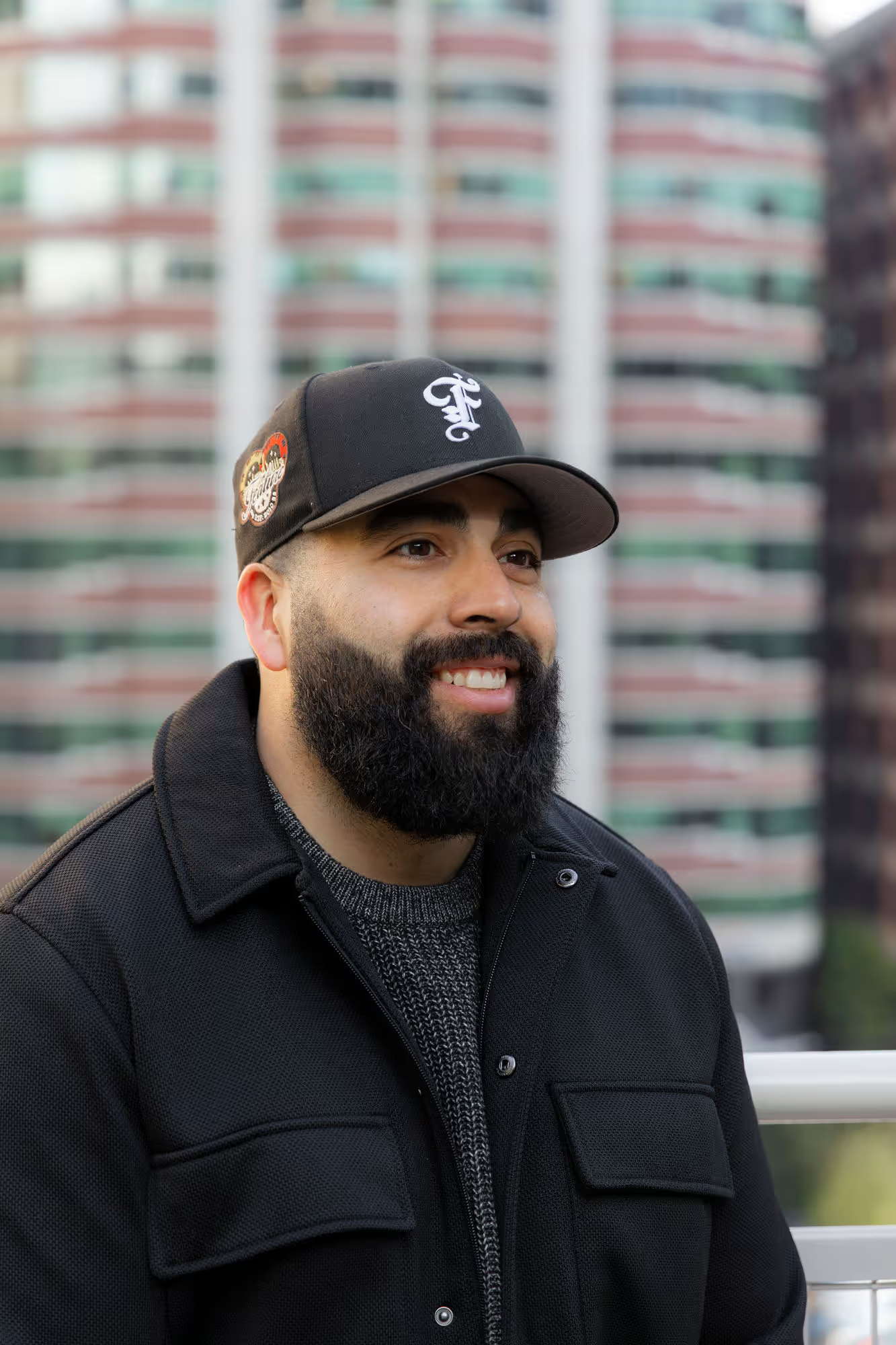
I recently sat down with Erick Ramirez, our founding Sales Director at Zig, for the latest episode of Take 5 with a Founder. Erick and I have worked together across multiple companies. He's one of the most reliable closers I know. And he came from heavy operations. SOPs, manufacturing, nothing customer-facing whatsoever. His story is proof that the skills that make someone great at sales aren't always the ones you'd expect.
Why Would Anyone Leave Operations for Sales?
It's a fair question. Operations is stable. The paycheck is consistent. Once you learn the role, there's a rhythm to it. Sales is the opposite—volatile, unpredictable, and emotionally demanding on a daily basis.
So I asked Erick why he made the jump. His answer was honest: "One, obviously the money. And then I get bored pretty quick. Being in operations, everything becomes pretty mundane. Being in sales, and not only sales, but being more on the tech or telco side, that's ever changing, so you're consistently learning."
That second part is what most people miss. Sales isn't just lucrative. It's one of the few professions where the landscape changes constantly. New products, new markets, new competitors, new technology. If you're someone who needs intellectual stimulation to stay engaged, sales gives you that in a way very few other careers can.
The Operational Edge Nobody Talks About
Here's where it gets interesting. The things that make operations people good at operations, process discipline, attention to detail, systematic thinking, are exactly the things that separate average sales reps from great ones.
I've talked about this before: there's an enormous operational workload in sales that nobody warns you about. CRM updates, contract management, implementation coordination, follow-ups, internal reporting. The intangible stuff that eats up 50-60% of your week if you're not careful.
Reps who come from traditional sales backgrounds often struggle with this because they were drawn to the profession for the relationships and the autonomy. But someone like Erick, who spent years building SOPs and managing manufacturing workflows? That operational muscle was already there. He didn't have to develop it. He just had to redirect it.
The consultative selling, the relationship building, the closing instincts. Those can be learned. Operational discipline is much harder to teach.
Resilience Looks Different When You've Already Reinvented Yourself
When you leave a stable career to enter one of the most volatile professions out there, you've already proven something about yourself. You're not afraid of discomfort. You're not afraid of starting over. And you're probably not going to let a lost deal or a rough quarter define you.
Erick's advice to new reps was simple: "Make sure you're consistently learning, especially in this industry. Things are changing on a daily basis. And secondly, just try to forget the nos as quickly as possible, because you're going to get so many nos. If you let that affect you, you're probably not going to have a good time in sales."
That resilience piece is massive. I've watched new reps take rejections personally. I did it myself early on. There's a process every salesperson goes through where you have to learn that a "no" isn't about you. It's about timing, fit, budget, or a hundred other things you can't control.
The reps who survive that learning curve fastest are often the ones who've already been through something hard. A career change. A different industry. A role where failure was part of the daily operating environment. They've already built the muscle. Sales just gives them a new place to use it.
The Takeaway for Sales Leaders
If you're building a sales team and you're only looking at candidates with traditional sales backgrounds, you're leaving talent on the table.
Look at the former operations managers who are bored and looking for a challenge. Look at the project managers who are great with people but want more upside. Look at the customer support reps who've been solving problems and building relationships for years but never carried a quota.
These people already have half the skills. The other half—product knowledge, closing techniques, pipeline management—can be taught. But the discipline, the resilience, the comfort with process? That's much harder to develop from scratch.
Sales has always been about human connection, problem-solving, and persistence. You don't need a pedigree for any of that. You just need the willingness to learn, the humility to listen, and the grit to keep going when things get hard.
Erick is living proof of that. And he's not the exception—he's the template for the kind of rep I want building the future of Zig.
Catch the conversation here:
