
Meta description: Learn what a sales execution platform is, how it differs from CRM and sales engagement, and how AI agents reduce admin and keep deals moving.
What Is a Sales Execution Platform? The Complete 2026 Guide
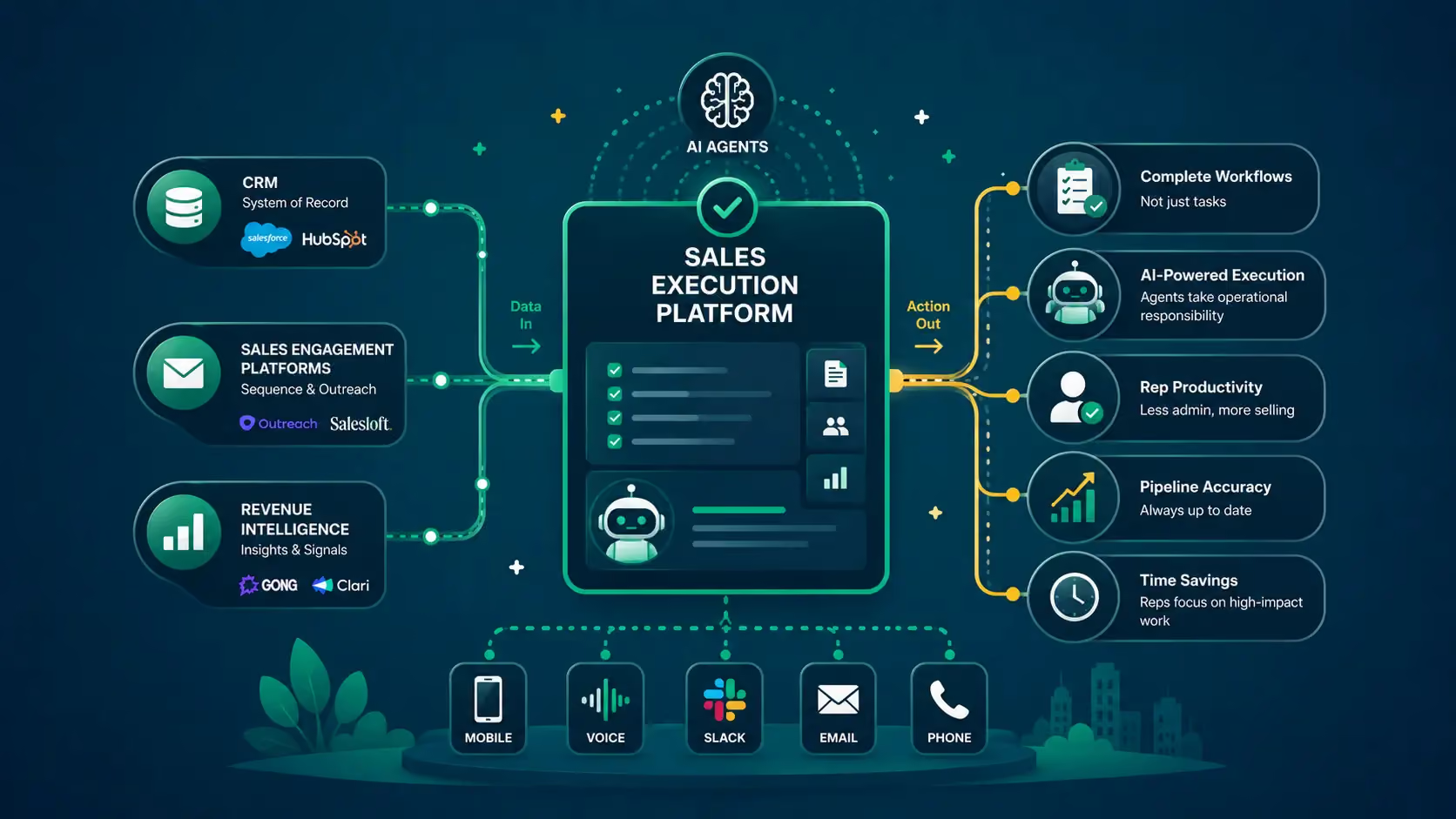
A sales execution platform is software that helps sales teams complete the workflows required to move deals forward usually through AI agents that act on behalf of reps.
It's different from a CRM (which stores data), a sales engagement platform (which sequences outreach), and a revenue intelligence tool (which surfaces insights).
The category sits downstream of all three. It takes the data, the orchestration, the insight, and does something with it.
This guide covers what a sales execution platform is, why the category exists in 2026, how it differs from adjacent categories, what it does, the realistic vendor shortlist, and how to evaluate platforms before buying.
Most established vendors use the term loosely, so a clean understanding requires walking through the distinctions carefully.
Key Takeaways
- The constraint on B2B revenue in 2026 is rep capacity. Studies put rep selling time at 28-36% of the workday. The rest goes to admin work that AI can now handle.
- The category is defined by what gets completed, not what gets surfaced. A tool that tells the rep "follow up with Acme" is sales engagement. A tool that drafts the follow-up, updates the CRM, and books the next meeting is sales execution.
- CRMs, sales engagement platforms, and revenue intelligence tools all stay in the stack. Sales execution platforms work on top of them rather than replacing them. Almost none of them do the operational work that connects those systems into actual deal movement.
- The 48-hour buyer-attention window is where most pipeline value gets lost. Buyer recall and engagement drop sharply after a meeting. Sales execution platforms close this gap by drafting follow-ups in the rep's voice while the conversation is fresh.
- Outcome-based pricing is the structural pricing innovation in the category. Most sales tools charge per seat, per action, or per token. This can create internal rationing about who gets access.
- The buyer's real risk is indecision, not picking wrong. 40-60% of B2B purchase processes end in no decision. The same dynamic shows up inside sales orgs because the workflow is incompatible with how their day runs.
- The market is splitting into two paths. AI-native execution platforms (Zig is the clearest example) are building the category from scratch. Incumbents (Salesforce Agentforce, HubSpot, Salesloft, Outreach) are extending execution features on top of existing products.
Keep your CRM. [Add the AI execution layer] that gets the work done.
What Is a Sales Execution Platform?
A sales execution platform is software that coordinates and completes sales workflows across tools, channels, and teams so reps can spend less time on admin and more time selling.
The work itself spans the full sales cycle:
- Finding and researching leads
- Prioritizing accounts and deals
- Drafting outreach
- Preparing for meetings (account context, deal history, stakeholders, recommended next steps)
- Recording and summarizing calls
- Updating CRM fields from conversation content
- Creating follow-up tasks
- Drafting next-step emails in the rep's voice
- Scheduling meetings
- Reviving stalled deals
- Keeping pipeline data clean
- Surfacing similar closed-won deals as context for live deals
- Coordinating handoffs between reps, managers, and RevOps
The defining trait of a sales execution platform is that it completes them rather than surfacing them as tasks for the rep to remember. A tool that tells the rep "you should follow up with Acme" is sales engagement or workflow software. A tool that drafts the follow-up, updates the CRM, and books the next meeting is sales execution software in the modern sense of the term.
Why the Category Exists Now
Sales teams don't have a tool shortage. They have an execution shortage.
Most sales stacks were built around separate systems for separate functions:
- The CRM stored records.
- The sales engagement platform sequenced outreach.
- The conversation intelligence tool analyzed calls.
- The revenue intelligence platform surfaced forecast risk.
- The prospecting database supplied contacts.
Each of these is useful. None of them did the operational glue work that connects them.
For a decade, the rep was the glue. The CRM only updates if the rep updates it. The follow-up only goes out if the rep drafts it. The next meeting only gets booked if the rep books it. The pipeline only stays clean if the rep cleans it. Software accumulated. Rep workload accumulated faster.
Two things changed in 2024-2025 that made the sales execution platform category viable:
- LLMs got good enough at extracting structured data from unstructured conversation. A call transcript can now be parsed into CRM field updates (stage, next step, close date, MEDDPICC fields) with citations back to the moment in the call where the answer surfaced.
- AI agents got good enough to execute multi-step workflows. Single-prompt summarization was useful but limited. Agentic workflows are what makes the category possible. The unit of work shifted from "task" to "workflow," and the workflows can now run without rep involvement at each step.
Together, these changes made it possible to build a layer that takes operational responsibility for sales admin rather than just surfacing it as tasks.
Why Sales Teams Need a Sales Execution Platform in 2026
Reps Are Still Buried in Admin
Reps lose hours per day to CRM updates after calls, drafting follow-up emails, prepping for the next meeting, prospect research, looking up information that should be one click away.
None of this is selling. All of it has to happen.
The compounding problem is that the work doesn't get done well when it gets done in stolen minutes between meetings. The CRM update gets typed quickly and incompletely. The follow-up gets delayed three days and goes out generically. The pipeline data degrades over the quarter.
By the time the manager runs the forecast call on Friday, the data feeding it is whatever the reps remembered to type before Thursday's deadline.
CRM Data Is Only Useful If Someone Updates It
A CRM can only report what gets entered. If reps delay updates, skip fields, forget next steps, or add vague notes, managers get pipeline fiction dressed as data.
The downstream effects compound. The forecast is wrong. The coaching is based on incomplete information. The deal that's actually at risk doesn't get flagged because the field that would have flagged it was never updated.
CRM update automation has been a promised feature for years.
Salesforce has shipped activity-capture tools. HubSpot has shipped automatic association rules. Every CI tool claims to push notes to the CRM. None of these solve the actual problem, which is that structured fields still require the rep to type something in.
A note logged automatically is not the same as a stage updated, a close date corrected, an economic buyer confirmed, or a competitor flagged.
The sales execution platform category exists in part because this gap turned out to be a software problem, not a discipline problem. Reps don't update the CRM because the workflow is hostile to a human running on three hours of sleep and four back-to-back demos.
AI agents that read the call transcript and write the structured fields don't have that problem.
Sales Engagement Doesn't Cover the Full Sales Day
Sales engagement platforms are mature, useful, and limited. They're good at cadences, email sequences, calls, and outbound rhythm. They're useful for structured outbound and for SDR motions specifically.
They are not what most B2B AEs spend their day inside, because most AE work is meeting prep, deal advancement, follow-through, internal coordination, and the long tail of "make sure this deal doesn't die between today and Friday."
The sales engagement vs sales execution distinction matters because vendors use the terms loosely.
Salesloft and Outreach both market themselves as sales execution platforms now. Functionally, they're sales engagement platforms with some execution-adjacent features layered on.
The unit of work in a sales engagement platform is a sequence step. The unit of work in a sales execution platform is a completed task or workflow.
Insights Don't Matter Unless Someone Acts on Them
Revenue intelligence platforms (Gong, Clari) identify deal risk, surface objections, flag forecast issues, and tell managers what's at risk in the pipeline. The dashboards are real. The insights are accurate. The information is genuinely useful for coaching and forecast accuracy.
The catch is that insight without execution capacity is just a longer to-do list.
A manager who sees that 12 deals have stalled needs someone to actually intervene on the 12 deals. Telling the rep doesn't always work. The reps already know which deals are stalling, and they're already not getting to them because of capacity constraints.
A sales execution platform addresses the constraint directly, whether the AI revives the stalled deal or the manager's dashboard reflects movement by Monday.
This is the structural difference between revenue intelligence and revenue execution platform thinking. Revenue intelligence tells you what's at risk. A revenue execution platform changes what's at risk.
AI Agents Can Now Complete Multi-Step Workflows
The unlock for this category in 2026 is agentic capability. AI agents can chain research, enrichment, drafting, and execution into single workflows that previously required human coordination across multiple tools.
A rep can say "follow up on the Acme call" and an agent can do the boring legwork. The category is moving from prototype to production across the vendor landscape.
Sales Execution Platform vs CRM
|
Category |
CRM |
Sales Execution Platform |
|
Main role |
Stores customer and deal data |
Completes sales workflows |
|
Core question |
What has been logged? |
What needs to happen next, and can the system do it? |
|
Main users |
Reps, managers, RevOps, leadership |
Reps, managers, RevOps, sales leaders |
|
Data quality |
Depends on manual updates |
Updates and maintains data automatically |
|
Rep experience |
Field- and record-based |
Task, workflow, command, and automation-based |
|
Best for |
System of record |
System of action |
|
Example output |
Account, contact, opportunity, activity history |
CRM update, follow-up draft, meeting prep, next step, deal revival |
Does a Sales Execution Platform Replace CRM?
Usually no. For most mid-market and enterprise teams, the sales execution platform vs CRM comparison isn't "which one do we pick."
The CRM remains the system of record. The sales execution platform works on top of it, completing the work and writing the results back to the CRM.
Salesforce stays Salesforce. HubSpot stays HubSpot.
Some AI-native platforms position themselves as full CRM replacements. For early-stage companies and small teams that haven't built around an existing CRM yet, this can work.
For teams already running Salesforce or HubSpot with five years of historical data, custom objects, and dozens of integrations, ripping out the CRM is usually a heavier project than the execution problem warrants. The pragmatic path is to keep the CRM and add the execution layer.
The corollary is that a good sales execution platform should write to whatever CRM the team already runs. If it requires CRM replacement, it's a CRM that includes execution features.
Sales Engagement vs Sales Execution: What Is the Difference?
Salesloft and Outreach both market themselves with the sales execution label while functionally remaining sales engagement platforms. The difference is that sales engagement helps reps communicate with buyers, while sales execution helps reps complete the work required to move buyers forward.
Sales Engagement Manages Outreach
A sales engagement platform helps teams run structured outbound and follow-up motions through cadences, templates, call activity, email sequences, LinkedIn touches, SMS, and task queues.
The platform's job is to make sure the right outreach happens to the right prospects at the right cadence. Done well, this is valuable, particularly for SDR-heavy outbound motions where consistency matters more than personalization.
Sales Execution Covers the Broader Work of Selling
Sales execution includes engagement but extends far beyond it:
- Research the account before outreach
- Prioritize the lead among the rep's other 80 leads
- Prep for the meeting (history, stakeholders, recent activity, talking points)
- Summarize the call and extract structured data
- Update the CRM from conversation content
- Draft the follow-up in the rep's voice
- Create the next-step task with owner and date
- Monitor deal risk between touches
- Revive stalled opportunities proactively
- Keep pipeline hygiene clean without rep intervention
The Simple Comparison
|
Category |
Sales Engagement |
Sales Execution |
|
Main unit of work |
Sequence, cadence, touchpoint |
Task, workflow, outcome |
|
Focus |
Outreach and buyer communication |
End-to-end sales work |
|
Common tools |
Salesloft, Outreach, Apollo |
Zig, AI-native sales execution platforms |
|
Typical output |
Email sent, call made, task completed |
CRM updated, follow-up drafted, meeting prepped, next step scheduled |
|
Best use case |
Structured outbound and engagement |
Reducing admin and keeping deals moving |
Most teams need both. A high-velocity outbound team needs a sales engagement platform for the structured cadence work and a sales execution platform for everything that happens around the cadences.
Sales Execution Platform vs Revenue Intelligence
Revenue Intelligence Explains What Is Happening
Revenue intelligence platforms analyze CRM data, call recordings, email activity, meeting outcomes, and pipeline movement to identify deal risk, forecast confidence, and coaching opportunities. Gong, Clari, and Chorus all sit in this category. They describe what's true about the pipeline right now.
Sales Execution Helps Change What Happens Next
Sales execution platforms take the next step: creating tasks, updating CRM fields, drafting follow-ups, preparing meetings, and moving deals forward. They don't just surface what's at risk, but do something about it, too.
Revenue intelligence gives the signal. Sales execution creates the motion.
In practice, the two categories complement each other. A revenue intelligence platform identifies the 12 stalled deals in the quarter. A sales execution platform drafts the revival outreach for each one, schedules the next touch, and updates the deal records when the touches land.
Enterprise teams typically run both. Mid-market teams often start with one or the other and add the second when the gap becomes visible.
What Does a Sales Execution Platform Do?
Automates CRM Updates
The platform captures deal context from calls, emails, meetings, notes, and rep commands, then writes structured updates back to the CRM. These include stage, close date, next step, MEDDPICC or MEDDIC fields, stakeholder data, custom objects.
This is CRM update automation in its most useful form. It’s not just activity logging, but field-level updates from conversation content with citations back to the source.
The category is also referred to as CRM automation in the broader sense, though most "CRM automation" pitches stop at workflow triggers rather than extending to conversation-driven field population.
Handles Follow-Ups
The platform drafts recap emails, creates next-step messages, and schedules reminders. All this is done in the rep's voice, trained on their past sent emails.
The rep reviews, edits if needed, and sends. Follow-up automation at this level closes the gap between "I had the call" and "I sent the follow-up" from three days to ten minutes.
Prepares Reps for Meetings
The platform pulls together account history, recent activity, stakeholders, past objections, open opportunities, prior notes, and recommended next steps before each meeting. The rep walks in (or dials in) with context they didn't have to assemble themselves.
Supports Lead Generation and Research
Modern platforms can research accounts, identify prospects, enrich contact data, and prepare personalized outreach. The agents do the work that SDRs and AEs used to do manually between calls.
Keeps Pipeline Hygiene Clean
The platform flags stale deals, missing next steps, overdue follow-ups, repeated close-date pushes, and CRM gaps. More importantly, it acts on what it flags.
This can range from drafting revival outreach for stalled deals, prompting reps to confirm or correct close dates, to filling in missing fields from existing conversation data. Pipeline clarity becomes a maintained state rather than a quarterly fire drill.
Works Across Channels
The strongest platforms accept commands and surface output across CRM, email, calendar, calls, Slack, mobile, and phone. Reps work where they already work. The platform meets them there rather than requiring them to switch into a separate app.
Best Sales Execution Platforms in 2026 at a Glance
The realistic shortlist of sales execution tools and adjacent platforms worth evaluating in 2026, grouped by what each actually does:
|
Platform |
Best for |
Main strength |
Limitation |
|
Zig |
AI sales execution for mid-market B2B teams |
AI agents for admin, CRM updates, meeting prep, lead gen, follow-ups, pipeline hygiene |
Best fit for teams ready to automate real sales work |
|
Salesloft |
Sales engagement and guided rep workflows |
Cadences, engagement, coaching, structured outbound |
Engagement-focused; lighter on broad admin automation |
|
Outreach |
Enterprise sales engagement and outbound execution |
Multichannel engagement, AI agents, unified workflows |
Stronger in engagement than full execution layer |
|
Apollo |
Prospecting and outbound execution |
Contact data plus outreach workflows |
Top-of-funnel focused, less post-meeting execution |
|
Gong |
Conversation and revenue intelligence |
Call analysis, deal insights, coaching |
Insight-focused, not post-call execution |
|
Clari |
Forecasting and revenue orchestration |
Pipeline inspection, forecasting, deal risk |
More leadership visibility than rep admin removal |
|
Salesforce Agentforce |
Salesforce-native AI execution |
Works inside Salesforce ecosystem |
Best for Salesforce-centered teams |
|
HubSpot Sales Hub |
CRM-centered sales execution for SMB/mid-market |
CRM, sequences, automation, reporting |
Works best if HubSpot is the sales center |
|
Freshsales |
AI-assisted CRM and sales automation |
Built-in telephony, Freddy AI, automated follow-ups |
Less broad than a dedicated AI execution layer |
|
Clay / AI workflow tools |
GTM workflow building |
Enrichment, research, workflow orchestration |
Requires setup and operational ownership |
Does a Sales Execution Platform Replace Salesloft and Outreach?
Yes, if your usage is shallow. If your sales team only uses Salesloft or Outreach for simple email sequences, automated tasks, and basic reminders, a sales execution platform can completely replace them.
No, if you run heavy outbound. If you have dedicated SDR teams executing complex, high-velocity, 30-touch cadences across LinkedIn, phone, and email, a specialized sales engagement platform is still required. A general execution tool won't outperform them at specialized outbound prospecting.
The Pragmatic Strategy
For most modern sales teams, the answer is layering rather than replacement.
- Keep the Engagement Platform: Use Salesloft or Outreach for what they do best, which is structured outbound sequences.
- Layer the Execution Platform: Add an AI sales execution platform like Zig to handle everything around the outreach. It automates your sales workflow automation, CRM update automation, follow-up automation, AI meeting prep, and pipeline hygiene so reps can actually focus on selling.
So if you want to consolidate everything into one single sales productivity platform to save on seat licenses, a full revenue execution platform transition is the right choice. Otherwise, let them coexist.
Which Sales Execution Platform Has Outcome-Based Pricing?
Zig.ai is the clearest fit for this model. Where traditional tech stacks charge per user seat, Zig ties its pricing directly to completed operational work. You pay for actual execution outcomes rather than software access.
Traditional Per-Seat SaaS vs. Outcome-Based Pricing
- Per-Seat Platforms: You pay a fixed fee for access regardless of team adoption. This model often forces RevOps teams to ration licenses, leading to fragmented usage and incomplete pipeline hygiene.
- Outcome-Based Platforms: The economics align directly with value delivered. Zig charges for completed sales admin automation tasks, meaning you only pay when the AI sales agents successfully offload work from your reps.
The Trade-Off: Predictability vs. Value
Outcome-based pricing is harder to budget predictably in year one than a standard sales productivity platform. However, for sales organizations that want to deploy AI sales automation broadly across all AEs and SDRs without paying for shelf-ware, this execution-based model eliminates the risk of paying for software that reps don't use.
Which Sales Execution Platform Has the Best AI Agent Capabilities?
The right choice depends entirely on whether your team needs broad daily autonomy or deep single-function specialization.
In 2026, AI sales agents have moved past basic chat prompts, handling everything from pre-call research to post-call CRM update automation.
Best for Full Sales Day Breadth
Zig is engineered to function as a complete sales productivity platform. Instead of sticking to a browser tab, its agents operate across mobile, voice, Slack, and email. It owns the end-to-end workflow: sourcing the lead, conducting account research, generating AI meeting prep, handling follow-up automation, and maintaining pipeline hygiene.
Best for Top-of-Funnel Prospecting
Apollo AI If your primary bottleneck is outbound data enrichment and list building, Apollo's agents excel at scanning their massive B2B database to automate cold outreach sequences based on buying intent signals.
Best for Native Ecosystems
For heavy, enterprise-tier deployments, Agentforce offers the deepest, native CRM automation workflows built directly into the Salesforce infrastructure.
How Sales Execution Platforms Reduce Rep Admin Time
The category exists because sales rep admin time is the constraint on revenue. 40-60% of B2B purchase processes end in no decision because they can't figure out how to decide confidently.
The internal parallel inside sales orgs is that reps postpone CRM updates and follow-ups because the workflow is incompatible with how their day runs.
Sales execution platforms address this by removing the deciding-which-thing-to-do-next problem from the rep's plate. The work happens automatically. The rep approves rather than executes.
Manual CRM Updates Disappear
AI captures call outcomes, meeting notes, next steps, deal changes, and follow-up needs from conversation content, then writes them back to the CRM as structured field updates. Stage, close date, MEDDPICC fields, stakeholder data are populated from what was actually said, with citations back to the source.
Follow-Up Drafting Gets Reduced
The platform drafts recap emails and next-step messages from conversation context, in the rep's voice, trained on past sent emails. The rep edits a sentence and sends. The 48-hour window where buyer attention is highest stops getting missed.
Meeting Prep Takes 90 Seconds
Account history, open opportunities, stakeholders, past objections, recent activity, and recommended next steps are assembled automatically before each meeting. The rep walks in with context they didn't have to assemble.
Tool Switching Drops Significantly
Instead of moving between CRM, inbox, Slack, calendar, call notes, prospecting tools, and spreadsheets to complete a workflow, reps use one execution layer that operates across all of them. The number of tabs open shrinks.
Manager Chasing Goes Away
Cleaner CRM data and automatic activity capture mean managers spend less time asking reps for updates. The forecast call works from current data rather than from "what the reps remembered to type by Thursday."
How to Choose the Best Sales Execution Platform
The most important question is what's the specific work that isn't getting done today, or is getting done badly, that you want AI to take responsibility for?
Common answers:
- CRM updates after calls
- Follow-up emails within the 48-hour buyer-attention window
- Meeting prep beyond what the rep can do in 5 minutes
- Prospect research at scale
- Pipeline hygiene across hundreds of deals
- Deal revival for stalled opportunities
- Scheduling and calendar coordination
- Sales engagement tasks that currently live in another tool
The right platform is the one that takes operational responsibility for the specific work your reps are not getting to. Vendors will pitch breadth; the buying decision is about depth in your actual workflow.
Check How It Works with Your Current CRM
The platform should improve CRM data, not create a separate shadow system. If the vendor's pitch involves replacing your CRM, that's a CRM purchase decision, not a sales execution platform decision. It’s a different price point and risk profile altogether.
The good signal is when the platform writes structured updates to your existing CRM and the CRM data quality measurably improves within 30 days of deployment.
Evaluate AI Autonomy and Approval Controls
Decide upfront what the AI is allowed to do automatically and where humans must approve. Drafting follow-up emails the rep reviews before sending is a different risk profile than auto-sending emails on the rep's behalf. Updating CRM fields with citations the rep can audit is different from black-box field changes the rep can't verify.
The pragmatic default for most teams is "AI drafts, human approves" for outbound communication and "AI updates, human can audit" for CRM changes. Platforms should let you configure this rather than imposing a single approval model.
Compare Pricing Models Carefully
Look beyond the headline number. The actual total cost in year one is usually 30-50% above the per-seat number for any platform with serious enterprise features.
Outcome-based pricing changes this math but introduces budget unpredictability. Per-seat pricing is predictable but creates internal rationing dynamics. Neither model is universally better; the right answer depends on your sales org's appetite for fixed vs. variable cost.
Assess Rep Adoption
The best platform should work inside the channels reps already use. If your reps live in Slack and the platform requires them to log into a separate web app to use the AI, adoption will be uneven. If your reps work from mobile and the platform is desktop-first, the workflow won't survive contact with the actual workday.
Test it by getting your three highest-volume reps to use the platform for a two-week pilot. Watch what they actually do.
If they're opening the platform daily without prompting, it works. If they're avoiding it after the first week, no amount of management pressure will change the outcome.
Look for Compounding Intelligence
The platform should improve as it learns from closed-won deals, past interactions, rep workflows, and customer patterns. A platform that performs the same on day 90 as on day 1 isn't using the conversation history it has access to.
Compounding intelligence is what separates serious AI sales execution platforms from wrappers on top of LLM APIs.
Final Verdict: Sales Execution Is the Missing Layer Between CRM and Revenue
Revenue in B2B is held back by the rep's capacity to actually do the work the tools surface. That capacity has been shrinking for a decade while the tool stack kept growing.
A system that takes the admin layer off the rep's plate so the rep gets back to being the part of the deal that can't be swapped out by a competitor in 18 months.
The follow-up that goes out at hour two instead of day three. The CRM that reflects what actually happened on Tuesday's call by Tuesday evening. The pipeline review that runs on current data instead of last week's memory. The hours a rep gets back to build the trust that closes deals software never will.
The execution layer is what gives the rep the time to be one.
[See Zig in Action] to automate your pipeline hygiene, streamline deal prep, and give your reps their time back.
FAQs
What is a sales execution platform?
A sales execution platform is software that completes sales workflows rather than just surfacing them as tasks for reps. It sits downstream of CRMs (which store data), sales engagement platforms (which sequence outreach), and revenue intelligence platforms (which surface insights), taking operational responsibility for the work those tools leave to the rep.
How is a sales execution platform different from a CRM?
A sales execution platform acts on CRM data; a CRM stores it. The CRM is the system of record. The sales execution platform is the system of action. Most teams keep their existing CRM (Salesforce, HubSpot) and add the execution platform on top rather than replacing it.
How is sales execution different from sales engagement?
Sales execution covers the full operational work of selling. Sales engagement covers a narrower slice: outreach, cadences, and structured rep touchpoints. The unit of work in sales engagement is a sequence step; the unit in sales execution is a completed task or workflow. Most B2B teams run a sales engagement platform (Salesloft, Outreach) alongside a sales execution platform rather than picking one.
Does a sales execution platform replace Salesloft and Outreach?
A sales execution platform replaces Salesloft or Outreach only for teams using those tools narrowly. Salesloft and Outreach remain strong for structured outbound and enterprise engagement workflows. Most teams run a sales engagement platform plus a sales execution platform rather than choosing between them.
What is the best sales execution platform for mid-market B2B teams?
Zig is the strongest sales execution platform for mid-market B2B teams in 2026. It uses AI agents to reduce admin, update CRM records, prepare meetings, draft follow-ups, and maintain pipeline hygiene without replacing the team's existing CRM. The platform writes to Salesforce, HubSpot, or whichever CRM the team already runs, and accepts commands from mobile, voice, Slack, email, and phone.
Which sales execution platform has outcome-based pricing?
Zig is the only major sales execution platform pricing on completed work rather than per seat, per action, or per token. The model prices around the AI taking operational responsibility for sales admin, which removes the internal rationing that per-seat pricing creates around who gets access to the tool.
Which sales execution platform has the best AI agent capabilities?
Zig has the broadest AI agent capabilities across the full sales day, including lead generation, meeting prep, CRM updates, follow-up drafting, and pipeline hygiene, with command surfaces across mobile, voice, Slack, email, and phone. Salesforce Agentforce is strongest for Salesforce-native agent workflows. Apollo AI is strongest for top-of-funnel prospecting. Outreach and Salesloft are extending into engagement-adjacent agents.
How do sales execution platforms reduce rep admin time?
Sales execution platforms reduce rep admin time by automating CRM field updates from conversation content, drafting follow-ups in the rep's voice, preparing meetings with account context, creating next-step tasks, and maintaining pipeline hygiene automatically. The result: reps spend more time on work requiring human judgment (selling, navigating complex deals) and less time on typing, drafting, and remembering.
